
Former War Loans of the United States
A Historical Retrospect
The United States Government asked for $2,000,000,000 on the First Liberty Loan in the Spring of 1917, and $3,034,000,000 was subscribed by over 4,000,000 subscribers. For the Second Loan, near the end of 1917, $3,000,000,000 was sought, and $4,617,532,300 was subscribed by 9,420,000 subscribers.
The Guaranty Trust Company of New York in a recent brochure reviewed the history of the various war loans of the United States, beginning with the Revolutionary loans, as follows:
When the patriots at Lexington "fired the shot heard 'round the world," the thirteen Colonies found themselves suddenly in the midst of war, but with practically no funds in their Treasuries. The Continental Congress was without power to raise money by taxation, and had to depend upon credit bills and requisitions drawn against the several Colonies. France was the first foreign country to come to the aid of struggling America, the King of France himself advancing us our first loan. All told, France's loan was $6,352,500; Holland loaned us $1,304,000; and Spain assisted us with $174,017. Our loan from France was repaid between 1791 and 1795 to the Revolutionary Government of France; the Holland loan during the same period in five annual installments, and the Spanish loan in 1792-3.
Our first domestic war loan of £6,000 was made in 1775, and the loan was taken at par. A year and a half later found Congress laboring under unusual difficulties. Boston and New York were held by the enemy, the patriot forces were retreating, and the people were as little inclined to submit to domestic taxation as they had formerly been to "taxation without representation." To raise funds even a lottery was attempted. In October, 1776, Congress authorized a second loan for $5,000,000. It was not a pronounced success, only $3,787,000 being raised in twelve months. In 1778 fourteen issues of paper money were authorized as the only way to meet the expenses of the army. By the end of the year 1779 Congress had issued $200,000,000 in paper money, while a like amount had been issued by the several States. In 1781, as a result of this financing and of the general situation, Continental bills of credit had fallen 99 per cent.
Then came Robert Morris, that genius of finance, who found ways to raise the money which assured the triumph of the American cause. By straining his personal credit, which was higher than that of the Government, he borrowed upon his own individual security on every hand. On one occasion he borrowed from the commander of the French fleet, securing the latter with his personal obligation. If Morris and other patriotic citizens had not rendered such assistance to the Government, some of the most important campaigns of the Revolutionary War would have been impossible. Following came the Bank of Pennsylvania, which issued its notes—in effect, loans—to provide rations and equipment for Washington's army at Valley Forge. These notes were secured by bills of exchange drawn against our envoys abroad, but it was never seriously intended that they should be presented for payment. The bank was a tremendous success in securing the money necessary to carry out its patriotic purposes, and was practically the first bank of issue in this country.
With the actual establishment of the United States and the adoption of the Constitution, Alexander Hamilton came forward with a funding scheme by which the various debts owed to foreign countries, to private creditors, and to the several States were combined. In 1791, on a specie basis, our total debt was $75,000,000. The paper dollar was practically valueless and the people were forced to give the Government adequate powers to raise money and to impose taxes. Between that date and 1812 thirteen tariff bills were passed to raise money to meet public expenditures and pay off the national debt.
THE WAR OF 1812.
For some time previous to the actual outbreak of the War of 1812 hostilities had been predicted. In a measure, this enabled Congress to prepare for it. And although the war did not begin until June of 1812, as early as March of that year a loan of $11,000,000, bearing 6 per cent. at par, to be paid off within 12 years from the beginning of 1813, was authorized. Of this, however, only $2,150,000 was issued, and all was redeemed by 1817. The next year a loan of $16,000,000 was authorized and subscribed. This was followed, in August, by a loan of $7,500,000 which sold at 88-1/4 per cent.
At the end of the war the total loans negotiated by the Government aggregated $88,000,000. The nation's public debt, as a result of this war, was increased to $127,334,933 in 1816. By 1835, either by redemptions or maturity, it was all paid.
MEXICAN WAR LOANS
The Mexican War net debt incurred by the United States was approximately $49,000,000 and was financed by loans in the form of Treasury notes and Government stock. The Treasury notes, under the act of 1846, totaled $7,687,800 and the stock $4,999,149. The latter paid 6 per cent. interest. By act of 1847 Treasury notes to the amount of $26,122,100 were issued, bearing interest in the discretion of the Secretary of the Treasury, reimbursable one and two years after date, and convertible into United States stock at 6 per cent. They were redeemable after Dec. 31, 1867. Economic developments following this war led to a period of extraordinary industrial prosperity which lasted for several years. A change in the fiscal policy of the Government, with overexpansion of industry, however, resulted in a panic in 1857 and a Treasury deficit in 1858. The debt contracted in consequence of the Mexican War was redeemed in full by 1874.
The situation had not improved to any great extent when Lincoln took office on March 4, 1861, and by mid-November of that year a panic was in full swing. The outbreak of the civil war found the Treasury empty and the financial machinery of the Government seriously disorganized. Public credit was low, the public mind was disturbed, and raising money was difficult. In 1862 the Legal Tender act was passed, authorizing an issue of $150,000,000 of legal-tender notes, and an issue of bonds in the amount of $500,000,000 was authorized.
This proved to be a most popular loan. The bonds were subject to redemption after five years and were payable in twenty years. They bore interest at 6 per cent., payable semi-annually, and were issued in denominations of $50, $100, $500, and $1,000. Through one agent, Jay Cooke, a genius at distribution, who employed 2,850 sub-agents and advertised extensively, this loan was placed directly with the people at par in currency. Altogether the aggregate of this loan was $514,771,600. Later in that year Congress authorized a second issue of Treasury notes in the amount of $150,000,000 at par, with interest at 6 per cent.; in January, 1863, a third issue of $100,000,000 was authorized, which was increased in March to $150,000,000, at 5 per cent. interest. These issues were referred to as the "one and two year issues of 1863."
DEFICIT IN 1862
In December, 1862, Congress had to face a deficit of $277,000,000 and unpaid requisitions amounting to $47,000,000. By the close of 1863 nearly $400,000,000 had been raised by bond sales. A further loan act, passed March 3, 1864, provided for an issue of $200,000,000 of 5 per cent. bonds known as "ten-fortys," but of this total only $73,337,000 was disposed of. Subsequently, on June 30, 1864, a great public loan of $200,000,000 was authorized. This was an issue of Treasury notes, payable at any time not exceeding three years, and bearing interest at 7-3/10 per cent. Notes amounting to $828,800,000 were sold. The aggregate of Government loans during the civil war footed up a total of $2,600,700,000; and on Sept. 1, 1865, the public debt closely approached $3,000,000,000, less than one-half of which was funded.
Civil war loans, with one exception, which sold at 89-3/10, were all placed at par in currency, subject to commissions ranging from an eighth to one per cent. to distributing bankers. The average interest nominally paid by the Government on its bonds during the war was slightly under 6 per cent. Owing to payment being made in currency, however, the rate was, in reality, much higher. With the conclusion of the war, the reduction of the public debt was undertaken, and it has continued with but two interruptions to date.
Heavy tax receipts for several years after the close of the war potentially enabled the Government to reduce its debt. Indeed, from 1866 to 1891, each year's ordinary receipts exceeded disbursements, and enabled the Government to lighten its financial burdens. In 1866 the decrease in the net debt was $120,395,408; in 1867, $127,884,952; in 1868, $27,297,798; in 1869, $48,081,540; in 1870, $101,601,917; in 1871, $84,175,888; in 1872, $97,213,538, and in 1873, $44,318,470.
Through refunding operations—in addition to bonds and short-time obligations redeemed with surplus revenues—the Government paid off, up to 1879, $535,000,000 bonds bearing interest at from 5 to 6 per cent. In this year the credit of the Government was on a 4 per cent. basis, and a year later on a 3-1/4 per cent. basis, against a maximum basis of 15-1/2 per cent. in 1864.
Between 1881 and 1887 the Government paid off, either with surplus revenues or by conversion, $618,000,000 of interest-bearing debt. In 1891 all bonds then redeemable were retired, and on July 1, 1893, the public debt amounted to less than one-third of the maximum outstanding in 1865. In 1900 the Government converted $445,900,000 bonds out of an aggregate of $839,000,000 convertible under the refunding act passed by Congress in that year. And further conversions in 1903, 1905, and 1907 brought the grand total up to $647,250,150—a result which earned for the Government a net annual saving in interest account of $16,551,037.
SPANISH WAR LOANS
The United States is a debt-paying nation. Hence, America's credit, despite occasional fluctuations, has steadily risen, and our national debt has sold on a lower income basis than that of any other nation in the world.
Following the sinking of the Maine in Havana Harbor, in 1898, Congress authorized an issue of $200,000,000 3 per cent. ten-twenty-year bonds. Of this aggregate $198,792,660 were sold by the Government at par. So popular was this loan, it was oversubscribed seven times. During the year 1898, following the allotment to the public, this issue sold at a premium, the price going to 107-3/4, and, during the next year, to 110-3/4. After the war ended, the Government, in accordance with its unvarying custom, began to pay off this debt; but, despite the Secretary of the Treasury's offer to buy these bonds, he succeeded in purchasing only about $20,000,000 of them.
American Labor Mission in Europe
War Aims of Organized Workers Conveyed to English and French Labor Unions
An American Labor Mission visited England and France in April, 1918, to present the views of American workingmen regarding the war. The delegation numbered eighteen, headed by James Wilson, President of the Patternmakers' League of North America. In his first address at London, April 28, before the British and Foreign Press Association, Mr. Wilson said:
We recognize as a fundamental truth that there can be no democracy with the triumph of the Imperial German Government. The principle of democracy or the principle of Prussian military autocracy will prevail as a result of the world war. There can be no middle course nor compromise. The contest must be carried on to its finality.
The Central Powers have staked everything on the result of this struggle. Their defeat means the destruction of a machine which has been built with remarkable efficiency and embodies the very life of the German race.
On the other hand, every free man instinctively appreciates that if we are to maintain the standard of civilization as worked out by the free men of the world, and if posterity is to be guaranteed political and industrial freedom, the war must be won by the allied countries. Peace now would be the fulfillment of the Prussian dream, for they have within their grasp the very heart of Continental Europe and resources which would make sure further conquest upon the other nations of the world.
The American labor movement, in whose behalf my colleagues and myself have been authorized to speak, declare most emphatically that they will not agree to a peace conference with the enemies of civilization, irrespective of what cloak they wear, until Prussian militarism has withdrawn within its own boundaries, and then not until the Germans have, through proper representatives, proved to our satisfaction that they recognize the right of peoples and civilized nations to determine for themselves what shall be their standard.
Unless reconstruction shall soon come from the German workers within that country, it is now plain that the opportunity to uproot the agencies of force will only come when democracy has defeated autocracy in the military field and wins the right to reconstruct the relations between nations and men.
German freedom is ultimately the problem of the German people, but the defeat of Prussian autocracy in the field will bring the opportunity for German liberty at home.
BRITISH SEAMEN'S ATTITUDE
J. Havelock Wilson, President of the British Seamen's Union, conferred with the American Mission at London, April 30, and informed it of the decision of his union to transport no pacifists to any peace conference. He made the following statement:
On Sept. 21, 1917, we formed what we called a Merchant Seamen's League, and declared that if German terrorism on the sea continued we would enforce a boycott against Germany for two years after the war, and that for every new crime from that time on we would add one month to the length of the boycott. The length of the boycott now stands at five years seven months. We have reliable information that this action is making a very profound impression on German manufacturers and shippers.
The British seamen got their first intimation of German treachery when the international transport strike was first proposed by German delegates ostensibly to pledge support. But the British learned later that the German delegates had in their pockets as they talked contracts signed with employers.
After that we watched the German Social Democrats in the Socialists' international. But we never could get the Germans to face the issue. Always they had excuses and evasions. We never had confidence in them. When war came we felt it our duty to take care of the men on our ships who could no longer sail, and also to set a good example.
Here were Germans on our ships who had been in England so long that they had forgotten their language. On Aug. 20, 1914—you see we acted quickly—we bought an estate of thirty-nine acres and built the model internment camp of Great Britain. We asked the Government to give us charge of all interned German sailors, and, let it be known to the credit of Great Britain, that was done. The Government allowed us all 10s. per week per man for upkeep. The camp became a great success. There were 1,000 German sailors interned in it.
Until May, 1915, all went well. On May 1 the interned men celebrated May Day, their international revolutionary holiday. They had their banners, "Workers of the World, Unite," "World Brotherhood," and so on. We had planned a great fête to be held later and I had secured the consent of several well-known persons to attend and help make it a success. On May 7 the Lusitania was sunk. I called the Germans in camp together and told them the terrible thing that had happened. I told them they were not to blame, but that the celebration could not be held. And they made no protest to me.
Now here were 1,000 Germans not under control of the Kaiser. Some of them had been among us twenty or thirty years. As soon as I had got out of the place they sang and cheered and rejoiced over the Lusitania disaster. They kept this up for four hours. They made me conclude that the camp must be handed over to the military as soon as possible, and this was done. Six months after that came the U-boat campaign, and, what made that worse, the fact that the U-boats always turned their guns on open boats.
I have got hundreds of cases of boys whose arms and legs have been blown off by U-boat guns while trying to get away from sinking ships in open boats. I wrote the Secretary of the International Transport Workers' Union protesting against these crimes. His reply attempted to justify every crime. That showed us that not only was the Kaiser responsible, but that the organized trade union movement of Germany was also responsible.
On June 1, 1917, a Socialist congress was convened at Leeds. It was advertised as the greatest conference ever held. We sent two men there to tell our story. Our men found that small bodies of only a handful of members had been delegated, who got the floor easily for the pacifist cause. Our men could not secure anything like a fair chance.
In this conference MacDonald, Fairchild, and Jowett were elected delegates to Stockholm. We at once resolved that no delegates should leave this country. And none did.
That is the history of the seamen's determination to bottle up such British pacifists as may desire to go abroad spreading their doctrine. Mingled with it is the grim, sad story of 12,000 members of the Seamen's Union who have lost their lives on merchant ships through Germany's criminal conduct on the seas.
And while there is here and there one in England who resembles a leader of labor who is a pacifist, the determination of the British seamen to go through with the war to the finish is scarcely more than a reflection of the rank-and-file spirit that is to be found throughout the whole of British labor.
NO PARLEYS WITH ENEMY LABOR
The American delegates met the representatives of labor in London and in Paris. In England they found the sentiment almost unanimous in approval of their decision to favor no conferences with German labor representatives until a victory had been achieved. In France, however, they encountered a group that favored contact with the German and Austrian Socialists. On May 6 there was a conference in Paris between the American labor delegates and the members of the Confederation Générale de Travail, the great French revolutionary labor organization. M. Jouhaux, General Secretary of the confederation, made the proposed international conference practically the sole note of his speech. France, he asserted, had no hatred for the German workers themselves, and he pointed out that if the conference took place it could have only one of two results. Either the workers in the enemy countries would refuse to join in the efforts of the workers of the allied countries for the liberation of the world's peoples, in which case the war must continue, or they would accept the allied view of what was right and would act with the allied peoples for the good of humanity.
The American reply was in these definite words:
"We don't hate the German workers any more than you do, but to give them our hand now would be looked upon by them only as a sign of weakness."
After reminding the congress of the hypocritical professions of the German Socialist Party before the war, the delegation declared itself in entire agreement with Samuel Gompers that American labor men would refuse to meet the German delegates under any circumstances so long as Germany was ruled by an Imperialistic Government. This declaration left Albert Thomas, former Cabinet officer and leader of the group, practically without a word to say. M. Thomas urged the same arguments as Jouhaux, but all the satisfaction the French labor men got was a promise from James Wilson, President of the American delegation, to report the matter to the American workers when he returned home.
Chairman Wilson reaffirmed at a luncheon given at the Foreign Office May 10 that American labor would not discuss the war with representatives of German labor until victory was won, because German labor, which was permitting the war, must do something itself in its own country toward ending the conflict justly before it could debate with labor representatives of the allied countries on what ought to be.
The luncheon was given by Stephen Pichon, Foreign Minister, on behalf of the French Government. With the exception of Premier Clemenceau, all the members of the Cabinet were present as well as other men notable in French public life. Ambassador Sharp was also in attendance.
The mission visited the fighting front and returned to London May 11 to hold mass meetings at English industrial centres. The members were received by the King and dined by the London Chamber of Commerce May 15.
Progress of the War
Recording Campaigns on All Fronts and Collateral Events From April 18, 1918, Up to and Including May 17, 1918
UNITED STATES
The campaign for the Third Liberty Loan of $3,000,000,000 ended on May 4. The total subscription was $4,170,019,650, as announced by the Treasury Department on May 17.
On April 20 President Wilson issued a proclamation extending to women enemy aliens the restrictions imposed on men.
The Overman bill, giving the President power to consolidate and co-ordinate executive bureaus and agencies as a war emergency measure, was passed by the Senate on April 28 and by the House on May 14.
The War Trade Board announced on May 3 that a general commercial agreement with Norway had been signed. On May 12 it announced that in order to conserve materials and labor and to add tonnage to the fleet carrying men and munitions to Europe, arrangements had been made to have Great Britain, France, Italy, and Belgium pass upon the advisability of releasing proposed exports before granting licenses to shippers. On May 14 an agreement was reached between the United States and the allied nations providing that all imports to the United States should be forbidden unless sanctioned by the War Trade Board.
A conference report on the Sedition bill, giving the Government broad new powers to punish disloyal acts and utterances, was adopted by the Senate on May 4, and by the House of Representatives on May 7, and sent to the President for his signature.
As a result of charges of graft, inefficiency, and pro-German tendencies directed against the military aircraft administration by Gutzon Borglum, President Wilson, on May 15, asked Charles Evans Hughes to aid Attorney General Gregory in making a thorough investigation. Mr. Hughes accepted the invitation. The President also wrote a letter to Senator Martin denouncing the Chamberlain resolution for an investigation of the conduct of the war by the Committee on Military Affairs of the Senate, and on the same day the Senate Committee on Audit and Expenses, to which the resolution had been referred, ordered a favorable report on it, modifying it so as to provide for a limited inquiry.
SUBMARINE BLOCKADE
The American steamship Lake Moor was reported sunk on April 11.
Forty-four Americans were killed when the Old Dominion liner Tyler was sunk off the French coast on May 2.
The British liner Oronsa was sunk on April 28. All on board except three members of the crew were saved. The British sloop Cowslip was torpedoed on April 25. Five officers and one man were missing.
The British Admiralty announced on April 24 the cessation of the weekly return of shipping losses and the substitution of a monthly report.
In a statement made in the Chamber of Deputies on May 11, Georges Leygues, the French Minister of Marine, declared that the total of allied tonnage sunk by German submarines in five months was 1,648,622, less than half the amount alleged by Germany to have been destroyed. He announced that the number of submarines sunk by the Allies was greater than Germany's output.
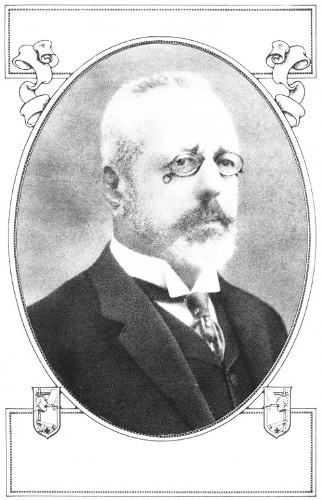
BARON STEPHAN BURIAN
Austro-Hungarian Foreign Minister in succession to Czernin
LEADERS IN THE IRISH CONTROVERSY
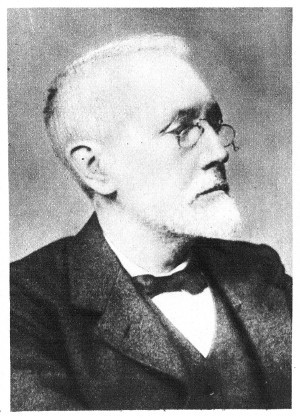
John Dillon, M. P., Leader of the Nationalist Party (Press Illustrating Service)
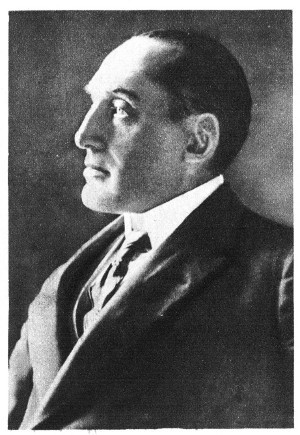
Joseph Devlin, Nationalist M. P. for West Belfast (Press Illustrating Service)
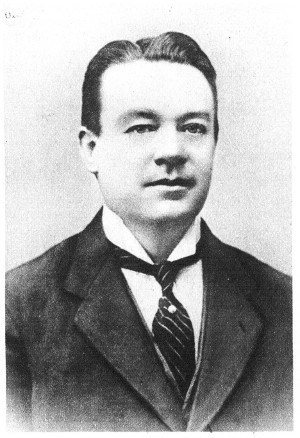
Sir Edward Carson, M. P., Leader of the Ulster Unionists (Central News)
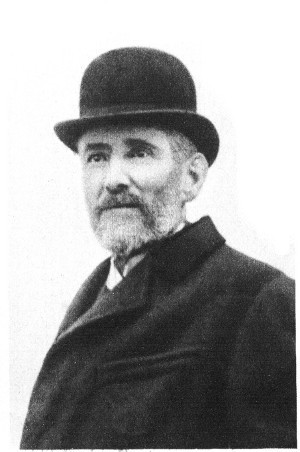
Sir Horace Plunkett, Chairman of the Irish Convention (Bain News Service)
Twelve German submarines were officially reported captured or sunk in British waters by American or British destroyers during the month of April, and two others were known to have been destroyed.
Ten passengers were killed when the French steamship Atlantique was torpedoed in the Mediterranean early in May. The ship managed to reach port.
CAMPAIGN IN WESTERN EUROPE
April 18—French advance on both banks of the Avre River between Thanne and Mailly-Raineval; Germans deliver terrific assaults upon the British front from Givenchy to the neighborhood of St. Venant.
April 19—Italian troops reach France; British beat off assaults on Mont Kemmel and recover ground west of Robecq; bombardment of Paris resumed.
April 20—Germans hurl force against American and French troops at Seicheprey and get a grip on the town, but are driven out; Belgians give ground temporarily near the Passchendaele Canal, but regain it; British re-establish their positions in Givenchy-Festubert region.
April 21—British drive Germans from some of their advanced positions near Robecq; Americans retake Seicheprey outposts.
April 23—British gain ground east of Robecq and in the neighborhood of Meteren.
April 24—Germans take Villers-Bretonneux, but are repulsed at other places south of the Somme; Franco-American positions at Hangard shelled.
April 25—British recover Villers-Bretonneux; French and British lose ground in the Lys salient before terrific German assaults from Wytschaete to Bailleul, aiming at Mont Kemmel; Germans take Hangard.
April 26—Germans take Mont Kemmel and the villages of Kemmel and Dranoutre and push on to St. Eloi; French recover part of Hangard.
April 27—British and French troops recover some of the ground lost in the Bailleul-Wytschaete sector; Germans repulsed at Voormezeele after hard fight.
April 28—Germans take Voormezeele, but are driven out by counterattack; Locre changes hands five times.
April 29—Germans make heavy attacks upon the entire Franco-British front from Zillebeke Lake to Meteren; British hold their line intact; French yield some ground around Scherpenberg and Mont Rouge, but later regain it; Belgians repulse attacks north of Ypres; Americans take over a sector of the French line at the tip of the Somme salient.
April 30—French recover ground on the slope of Scherpenberg and advance their line astride the Dranoutre road; positions of the allied forces push forward between La Clytte and Kemmel.
May 1—Americans repulse attacks in the Villers-Bretonneux region; Béthune region bombarded.
May 3—French and British improve their positions along the Somme River southward to below the Avre; French take Hill 82, near Castel, and the wood near by.
May 4—Germans repulsed at Locon; French make progress near Locre, and British advance near Meteren; Americans in the Lorraine sector raid German positions south of Halloville and penetrate to third line; French shell disables last of German guns that have been bombarding Paris.
May 5—Franco-British forces, in operation between Locre and Dranoutre, advance their positions on a 1,000-yard front to an average depth of 500 yards; Germans foiled in attempt to occupy former American trenches in the Bois Brûlé.
May 6—Germans launch heavy gas attacks against American troops on the Picardy front.
May 8—Germans gain a foothold at several points midway between La Clytte and Voormezeele, but are repulsed at other points along the line; Australians advance 500 yards near Sailly and 300 yards west of Morlancourt.
May 9—British re-establish their lines and drive Germans out of British trenches between La Clytte and Voormezeele; Germans occupy British advanced positions at Albert on a front of about 150 yards.
May 10—British restore their line at Albert; German artillery fire active in the Vimy and Robecq sectors of the British front, and south of Dickebusch.
May 11—Berlin reports heavy losses inflicted on American troops southwest of Apremont; Germans gain small portion of territory southwest of Mailly-Raineval, but are driven out by French; French gain ground in Mareuil Wood.
May 12—French troops north of Kemmel capture Hill 44 and an adjoining farm; Germans bombard Albert, Loos, and Ypres sectors, and lines southeast of Amiens, but are repulsed by the French near Orvillers-Sorel.
May 13—Americans blow up enemy ammunition dump and start fires in Cantigny, with explosions; Germans resume firing north of Kemmel.
May 14—Hill 44, north of Kemmel, changes hands several times; French advance in Hangard region; British carry out successful raid near Robecq.
May 15—Germans repulsed by the British southwest of Morlancourt and by the French north of Kemmel. May 16—Heavy gunfire in the Lys and Avre areas.
May 17—Official announcement that American troops have taken their place in the British war zone in Northern France; German gunfire increases in the Lys and Hailles region.
ITALIAN CAMPAIGN.
May 3—Heavy fighting reported along the entire front between the Adriatic and the Giudicaria Valley.
May 5—Increase in artillery fire, notably in the Lagarina and Astico Valleys.
May 11—Italians penetrate advanced Austrian positions on Monte Carno.
May 12—Italians wipe out a Coll dell' Orso garrison.
May 14—Austrian attempts to renew attacks on Monte Carno and to approach Italian lines at Dosso Casina and in the Balcino and Ornic Valleys fail.
May 16—Italians enter Austrian lines at two points on Monte Asolone; British make successful raid at Canove.
CAMPAIGN IN ASIA MINOR.
April 21—Armenians retake Van.
April 27—British in Mesopotamia advance north of Bagdad and Kifra.
April 28—British cavalry forces a passage of the Aqsu at a point southwest of Tuzhurmatl.
April 29—British take Tuzhurmatl.
April 30—British advance as far as the Tauk River, and occupy Mezreh.
May 1—Es-Salt taken by the British.
May 7—British enter Kerkuk.
May 12—Arabs of Hedjaz raid Jadi Jerdun station and a post on the Hedjaz Railway, taking many prisoners and destroying tracks and bridges.
AERIAL RECORD.
Trent, Trieste, and Pola were raided by Italian scouts on May 10.
Carlshutte, Germany, was bombed by the British May 3. Saarbrucken was bombed on May 16, and five German machines were brought down.
British aviators raided the aviation grounds at Campo Maggiore on May 4 and brought down fourteen Austrian planes.
German airmen attacked Dutch fishing vessels in the North Sea May 5.
Ostend, Westende, and Zeebrugge were attacked by British seaplanes on May 6.
Many notable air battles occurred on the western front in connection with the fighting in Picardy and Flanders. In one day, May 15, fifty-five German airplanes were brought down by British and French aviators, and on May 16 forty-six German machines were brought down by the British.
NAVAL RECORD.
Early in the morning of April 23 British naval forces, in co-operation with French destroyers, carried out a raid against Zeebrugge and Ostend, with the object of bottling up German submarine bases. Five obsolete British cruisers, which had been filled with concrete, were run aground, blown up, and abandoned by their crews, and two old submarines were loaded with explosives for the destruction of the Zeebrugge mole. A German destroyer was sunk and other ships were shelled. Twenty yards of the Zeebrugge mole were blown up, and the harbor was blocked completely. On May 10 the obsolete cruiser Vindictive was sunk at the entrance to Ostend Harbor, practically completing the work.
An Austrian dreadnought of the Viribus Unitis type was torpedoed by Italian naval forces in Pola Harbor on the morning of May 14.
RUSSIA.
On April 20, Japan ordered reinforcements sent to Vladivostok, as the Bolsheviki had directed the removal of munitions westward. On the same day diplomatic representatives of the allied powers were formally informed by the Siberian Provincial Duma of the formation—by representatives of the Zemstvos and other public organizations—of the Government of Autonomous Siberia.
The Bolshevist Foreign Minister, George Tchitcherin, on April 26, addressed representatives in Moscow of the United States, England, and France, requesting the speedy recall of their Consuls from Vladivostok and the investigation of their alleged participation in negotiations said to have been conducted between their Peking embassies and the Siberian Autonomous Government. He also asked them to explain their attitude toward the Soviet Government and the alleged attempts of their representatives to interfere with the internal life of Russia. Japan was asked to explain the participation of Japanese officials in the counter-revolutionary movement. An official report of the demand for the removal of John K. Caldwell, the American Consul at Vladivostok, was received by the American State Department on May 6, from Ambassador Francis. The State Department announced that Mr. Caldwell had done nothing wrong and that he would not be removed. On the same day a report was received that the Russian authorities at Irkutsk had arrested the Japanese Vice Consul and the President of the Japanese Association on the charge of being military spies.
At a meeting of several thousand peasants of the Ukraine, held on April 29, a resolution was passed calling for the overthrow of the Government, the closing of the Central Rada, the cancellation of the Constituent Assembly convoked for May 12, and the abandonment of land socialization. General Skoropauski was proclaimed Hetman and was recognized by Germany.
The German advance into the Ukraine continued, military rule was established in Kiev, and several members of the Government, including the Minister of War, were removed on the ground that the Government had proved too weak to maintain law and order. Vice Chancellor von Payer, speaking before the Main Committee of the German Reichstag on May 4, attempted to justify Germany's use of the iron hand by declaring that grain had been withheld and that prominent Ukrainians, members of the Committee of Safety, had been caught planning the assassination of German officers.
Rostov-on-the-Don was occupied by Germans on May 9, but was recaptured by the Russians the next day.
M. Tchitcherin, on May 12, sent a wireless message to Ambassador Joffe, at Berlin, instructing him to try to obtain from Berlin cessation of every kind of hostility, and declared that captures of Russian territory violated the terms of the treaty of peace. He also gave assurances that the Black Sea Fleet would not attack the port of Novorossysk, which the Germans threatened to capture. In an evasive reply the Commander in Chief of the German troops in the East said he could only agree to the cessation of naval operations against the Black Sea Fleet, provided that all ships returned to Sebastopol and were retained there, thus leaving the port of Novorossysk free for navigation.
A Swedish report of May 14 told of a German ultimatum to the Bolshevist Government demanding the occupation of Moscow and other Russian cities, the abolishment of armaments, and the effecting of certain financial measures which would practically make Russia a German colony.
Professor H. C. Emery, the American who was seized when the Germans landed in the Aland Islands, was freed from prison, but was still detained in Germany, according to a report received on May 5.
The British Foreign Minister, A. J. Balfour, announced in Commons on May 5 that Great Britain was ready to grant temporary recognition to the Esthonian National Council.
Transcaucasia proclaimed its independence on April 26, and a conservative Government was formed, headed by M. Chkemkeli.
Ciscaucasia proclaimed itself an independent State on May 14.
The Caucasus proposed peace negotiations with Turkey May 10.
Russian Bolshevist troops crossed the Caspian Sea in gunboats and recaptured Baku from the Mussulmans May 17.
Emperor William issued a proclamation, May 14, recognizing the independence of Lithuania, allied with the German Empire, and saying that it was assumed that Lithuania would participate in the war burdens of Germany.
FINLAND.
Hostilities between the Finnish White Guards and the Germans and the Red Guards continued. Germany protested to the Bolshevist Foreign Minister on April 23 against the landing of allied troops at Murmansk, declaring that such landing was a violation of the Brest-Litovsk treaty. Germany also denied that Germans had participated in the raid of the Finnish White Guards upon Kem.
The White Guards, on April 26, demanded the surrender of a fort on the Finnish coast ceded to Russia by the Finnish Bolshevist Government, constituting part of the Kronstadt defenses. The Kronstadt Council of Workmen's and Soldiers' Delegates refused to comply with the demand, and organized resistance.
Viborg was taken by the White Guards on April 30. On May 3, the Germans in the southwest defeated the Red Guards after a five days' battle near Lakhti and Tevastus. The Finnish flag was raised on the fortress of Sveaborg on May 13. On May 15 the White Guards entered Helsingfors, and on May 17 they seized Boris-Gleb on the Norwegian border from the Russian troops, thus gaining access to the Arctic Ocean.
RUMANIA.
A peace treaty between Rumania and the Central Powers was signed May 6, and supplementary legal, economic, and political treaties were later concluded.
The Rumanian Parliament was dissolved on May 10 by royal decree and new elections were ordered.
POLAND.
The Lausanne Gazette announced on May 12 that Poland was handed over to Germany economically, politically, and militarily, according to a secret treaty arranged at Brest-Litovsk between a Russian delegation, headed by Trotzky, and German representatives. At a conference between the Emperors of Germany and Austria-Hungary, Germany agreed to the solution of the Polish question desired by Austria, in return for certain concessions from Austria.
MISCELLANEOUS.
The Guatemalan Assembly, on April 22, declared the country to be in the same position as the United States in the war, and the following day the Guatemalan Minister at Washington announced that the declaration was meant as a declaration of war against Germany and her allies.
In response to a request from Uruguay for a definition of the relations between the two countries, Germany replied, according to an announcement made public May 16, that she did not consider that a state of war existed.
Nicaragua declared war on Germany and her allies on May 7.
Royal assent to the British man-power bill, providing for conscription in Ireland, was given on April 18. An Order in Council was issued on May 1 postponing the Conscription act.
Lord Wimborne, Lord Lieutenant of Ireland, and Henry E. Duke, Chief Secretary, resigned on April 24. Edward Shortt was appointed Chief Secretary and Viscount French succeeded Lord Wimborne as Lord Lieutenant.
James Ian MacPherson announced in the House of Commons on May 9 that a German submarine had recently landed an associate of Sir Roger Casement on the Irish coast, where he was arrested by Government officials, and that he was now in the Tower of London and would be tried by court-martial. A dispatch dated May 15 revealed that two Germans accompanied him, and that all three were imprisoned.
All the Sinn Fein leaders, including De Valera and the Countess Markievicz, were arrested in Belfast, Dublin, and other cities, on May 17, as the result of the discovery of treasonable relations with Germany. Lord Lieutenant French issued a proclamation dealing with the situation, calling on all loyalists to aid in blocking the German plans and asking for volunteers to provide Ireland's share of the army.
Sir Arthur Roberts, financial adviser to the British Air Minister, resigned on April 24 as a result of a disagreement with Lord Rothermere. The next day Lord Rothermere resigned. He was succeeded by Sir William Weir. Baron Rhondda resigned as Food Controller and Lord Northcliffe resigned as Chairman of London headquarters of the British Mission to the United States and Director of Propaganda in Enemy Countries.
Representatives of the allied nations met at Versailles on May 1 and May 2.
On May 6 Major Gen. Frederick Barton Maurice, formerly Director General of British Military Operations, addressed a letter to The London Daily Chronicle challenging the statements made in the House of Commons by Premier Lloyd George and Andrew Bonar Law with regard to the military situation and demanding a Parliamentary investigation. On May 7 ex-Premier Asquith moved for an inquiry in Commons. After a speech by Lloyd George in Commons in his own defense, May 9, the House, by a vote of 293 to 106, upheld him and the Government and rejected Mr. Asquith's motion.
The Austrian Premier was empowered by Emperor Charles, on May 4, to adjourn Parliament and to inaugurate measures to render impossible the resumption of its activities.
A growing resentment against the domination of Austria-Hungary by Germany was manifested by Austria's Slavic peoples. A dispatch from Switzerland dated May 8 told of serious disturbances in the fleet, caused by seamen of Slavic and Italian stock, which resulted in several changes in the high command. A new Hungarian Cabinet, headed by Dr. Wekerle, was formed on May 10. On May 13 Vienna papers published a declaration by the Czech members of the Austrian House of Lords in which an independent State was demanded.
As a result of a conference between Emperor William and Emperor Charles at German Headquarters on May 10, Austria-Hungary concluded a new convention with Germany.
M. Duval, manager of the Bonnet Rouge, and his associates, Leymarie and Marion, directors of the paper; Goldsky and Landau, journalists, and two minor men named Joucla and Vercasson, were placed on trial in Paris on charges of treason and espionage, on April 29. On May 15, Duval was sentenced to death for treason, and the six other defendants were sentenced to imprisonment for terms ranging from two to ten years.
The British Government replied to the note of the Netherlands Government concerning the taking over of Dutch ships on May 1, and asserted the full legality of the seizure.
A London dispatch, dated April 24, announced that Germany had sent an ultimatum to Holland demanding the right of transit for civilian supplies and sand and gravel. Holland yielded to these demands on April 28, with the stipulation that the sand and gravel should not be used for war purposes. On May 5, Foreign Minister Loudon announced in the Dutch Chamber that Germany had promised to transport no troops or military supplies and to limit the amount of sand and gravel.
Persia informed Holland, on May 3, that it regarded as null and void all treaties imposed upon Persia in recent years, and especially the Russo-British treaty of 1907 regarding the spheres of influence.