
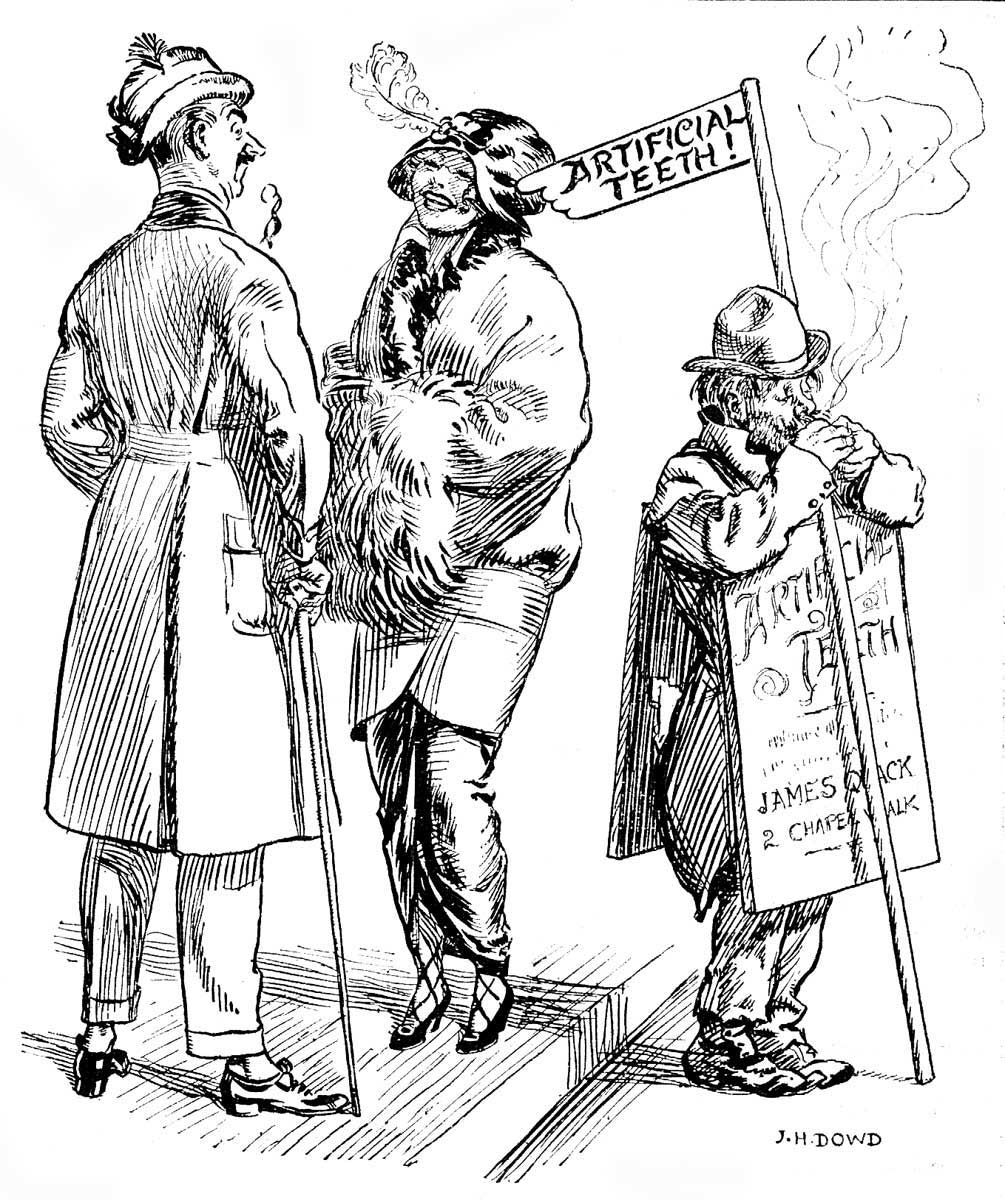
A VICTIM OF CIRCUMSTANCES.
"The audience was divided into two sections; the Smith supporters cheered every blow Wye landed as a point for their man, while Wye's friends were equally enthusiastic on his behalf."—Daily Mail.
With the Smith supporters behind us, and a Smith referee, we are prepared to take on Carpentier.
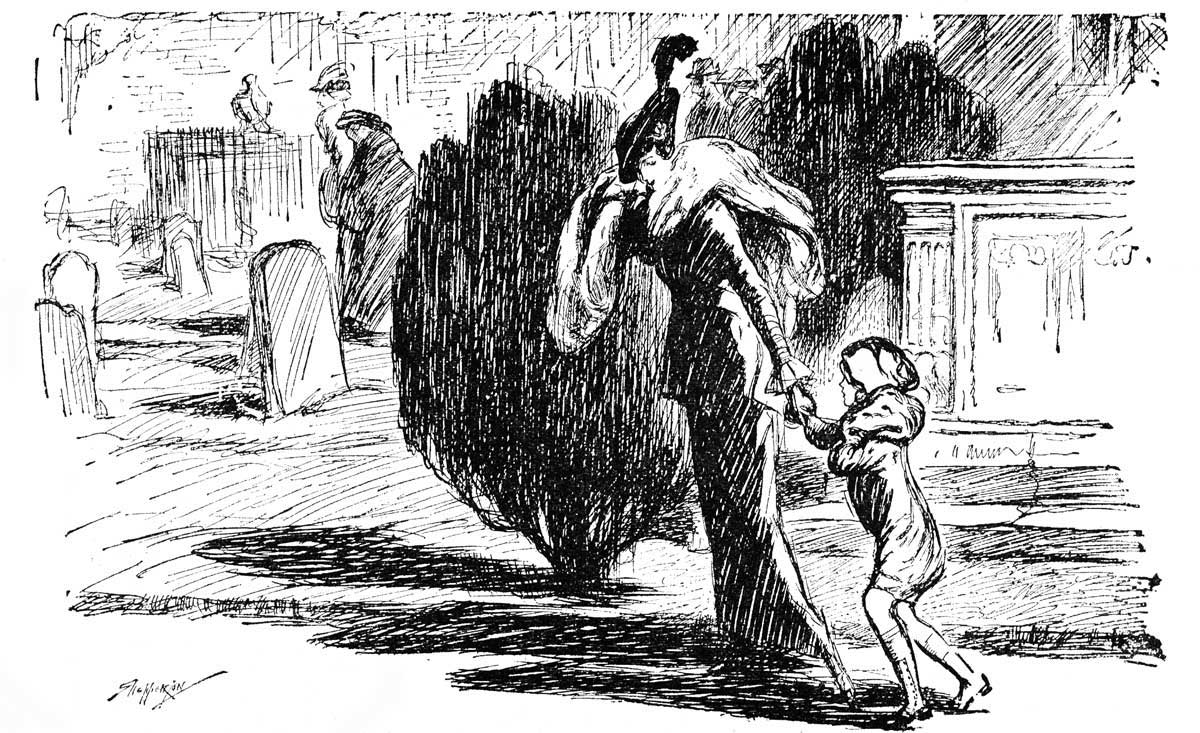
Mother. "Well, darling, do you remember anything the clergyman said?"
Barbara. "Yes, Mummy, I heard him say, 'half-past-six'!"
"PUNCH" IN HIS ELEMENT.
(Modelled on the Opening Chorus of "Atalanta in Calydon.")
Punch, appearing on All Fools' Day,
Fills with giggles the hours and graces,
Causes the hares of March to stay;
And the soft sweet hatters along the Strand
Remember the dreams of Wonderland,
And the chessboard world and the White King's faces,
The hamless commons and all the hay.
Spirit of Laughter, descend on the town
With tumbling of paint-pails from top of the ladder
And blowing of tiles from the stockbroker's crown;
Bind on thy hosen in motley halves
Over the rondure and curve of thy calves;
The night may be mad, but the morn shall be madder—
Madder than moonshine and madder than brown.
Weave it what strains of ineffable things?
O that my Muse were a Muse with a gripe of it,
Engined with petrol and wafted by wings!
For the sorrows and sighings of winter are done,
And Punch is appearing on April 1,
And a savour of daffodils clings to the type of it,
And the buttered balm of a crumpet clings.
In drowning the day and the night with their din,
And all too soon the unwary lover
Is walking about in vestures thin;
And the "nuts" are buying their shirts of cotton,
And, cast into storage cold, forgotten,
From delicate necks they were wont to cover,
'Possum by 'possum, the stoles come in.
The hold that tackles a travelling heel;
And the front of the town with new fire flushes,
The paints that follow the paints that peel;
And the season comes with its gauds and gold
When the amorous plaints once more are told,
And the polished hoof of her partner crushes
The damsel's shoes in the ballroom reel.
Fleeter of foot than the Fleet Street kid,
Shall hurry in motor-cars left and right
Saying what Kent and Yorkshire did;
And, stout as pillars of marble set,
The copper shall capture the suffragette,
And screen from peril and heave from sight
The maid pursuing, the Minister hid.
Her hatbrim tilted across her eyes;
The cricketer dips to the flying ball,
His white pants billowing round his thighs;
But thou, Charivari, week by week
Remaining (I take it) quite unique,
Shalt shake with laughter and pink them all
With points that puncture the vogue that flies.
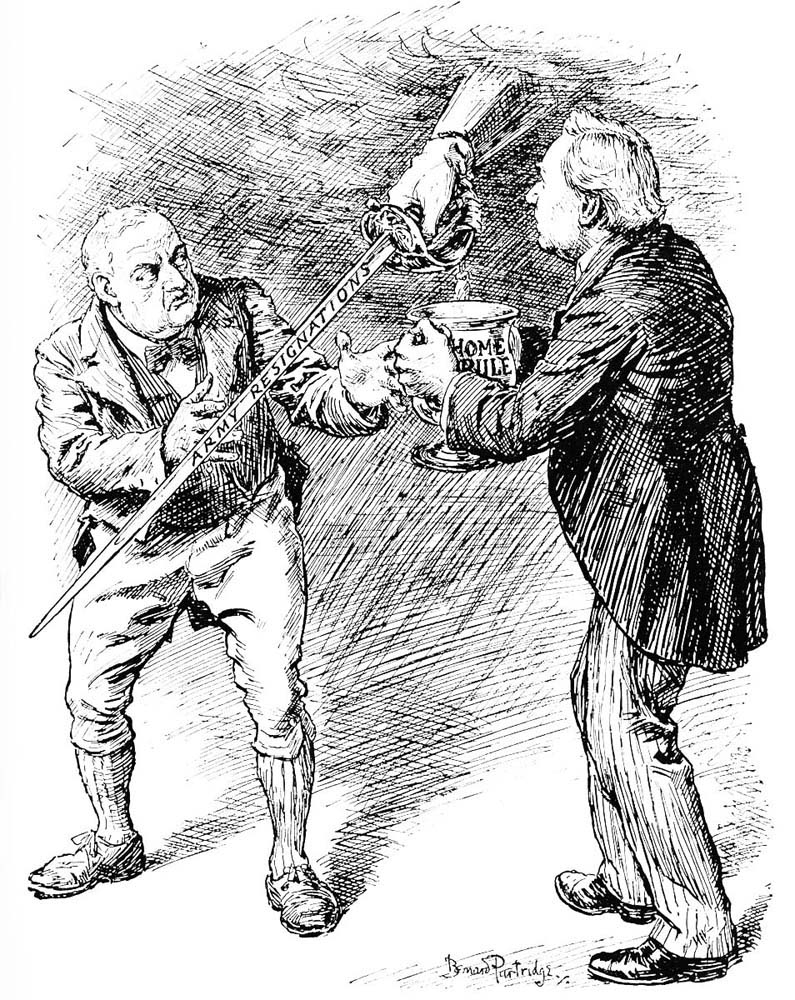
"THERE'S MANY A SLIP ..."
[Illustration: AT THE DRESS REHEARSAL OF THE NEW COMIC OPERA, "RESIGNATION" (AS PLAYED TWICE WEEKLY.)
Seelius. "I am undone!" [Thrusts sword beneath armpit and expires.
Actor-Manager. "Capital! But try, if possible, to make it just a leetle more convincing."]
ESSENCE OF PARLIAMENT.
(Extracted from the diary of Toby, M.P.)
House of Commons, Monday, March 23.—In arrangement for business of week to-day set apart for discussion of Naval Estimates. That meant a problematically useful, indubitably dull debate. As has been remarked before, it is the unexpected that happens in House of Commons. Since it adjourned on Friday portentous news came from Ireland, indicating something like revolt among officers of the Army stationed there for avowed purpose of backing up civil force in preservation of peace and order. Wholesale resignations reported.
The very existence of the Army seemed at stake. Had mere business, such as the voting of over £50,000,000 for upkeep of Navy, been to the fore, benches would have been half empty. As it was, they were thronged. Over the crowded assembly hurtled that indescribable buzz of excitement that presages eventful action. The Premier and Leader of Opposition appearing on the scene were severally greeted with strident cheers from their followers. Prince Arthur, the Dropped Pilot, at urgent entreaty returning to the old ship in time of emergency, enjoyed unique distinction of being cheered by both sides. Demonstration more eloquent than ordered speech.
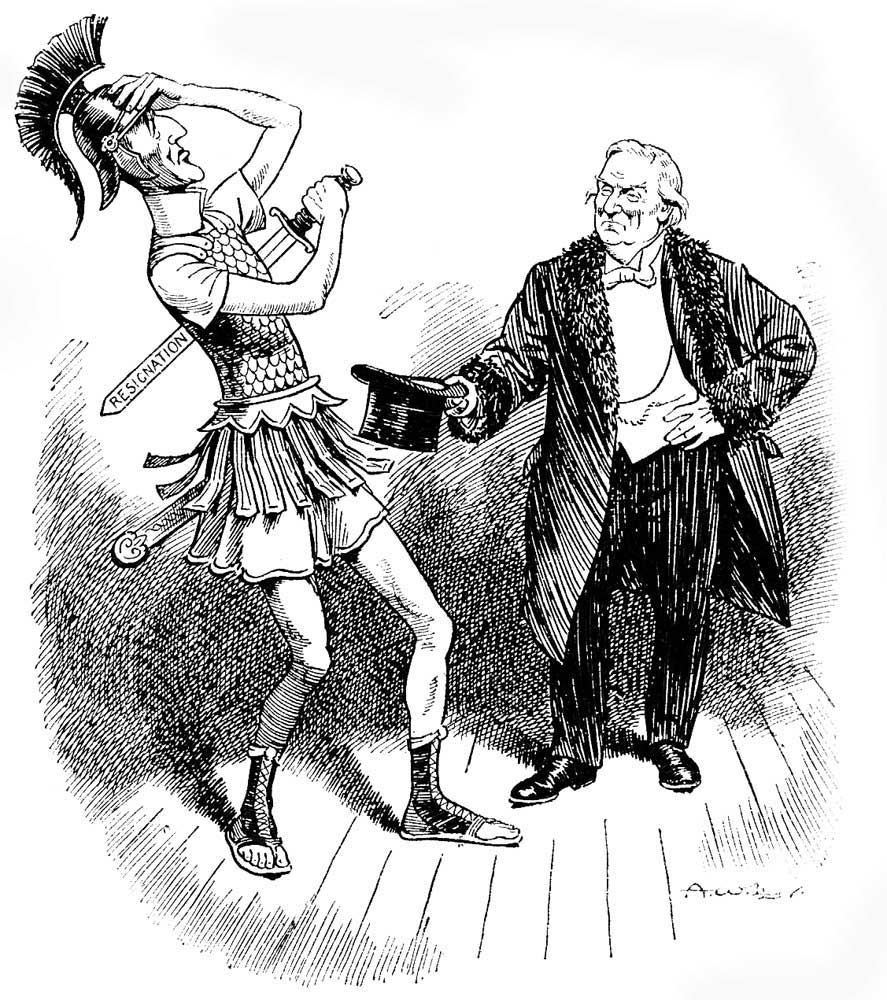
AT THE DRESS REHEARSAL OF THE NEW COMIC OPERA,
"RESIGNATION"
(AS PLAYED TWICE WEEKLY.)
Seelius. "I am undone!"
[Thrusts sword beneath armpit and expires.
Actor-Manager. "Capital! But try, if possible, to make it just a leetle more convincing."
Questions over, Seely read studiously prosaic statement of events leading up to resignations on the Curragh. Someone had blundered, or, as the Secretary for War, anxious above all things to avoid irritation, preferred to put it, "there had been a misunderstanding." All over now. Explanations forthcoming had smoothed out difficulty. Resignations tendered had been withdrawn. Familiar military command "As you were" obeyed.
That all very well. Opposition, upon whom crowning mercy had fallen from beneficent heavens, naturally indisposed to treat unexpected boon in niggardly spirit. Bonner Law insisted on business being set aside and opportunity provided for rubbing in the salt. Lively debate followed. Speeches delivered with difficulty through running stream of interruption. Byles of Bradford began it. Breaking in upon Bonner Law's speech with pointed question he was greeted with savage shout of "Sit down" that would have made the rafters ring, supposing there were any. Under existing circumstances the glass ceiling looked down compassionately, whilst Byles, after remaining on his legs for what seemed a full minute, resumed his seat.
Amid uproar that raged during succeeding four hours, Speaker, preserving a superb equanimity, rode upon the whirlwind and directed the storm. Whilst Premier was trying to make himself heard, Helmsley constantly interrupted. Speaker made earnest appeal to Members to listen in patience.
"There will," he said, "be plenty of time afterwards for anyone to ask any question or to reply to any point."
Winterton, ever ready to volunteer in the interests of order, asked whether John Ward, seated opposite, had not sinned in same manner as Helmsley.
"That is no reason why the noble lord should imitate him."
"What is sauce for the goose is sauce for the gander," retorted Winterton. Left House in doubt which was which.
Later Speaker dropped down on Page Croft.
"The hon. member," he said, "is not entitled to interrupt because some argument suddenly strikes him."
House laughed at this piquant way of putting it. Sark recalls curious fact. 321 years ago the same dictum was framed in almost identical phrase. Essential difference was that it was the Speaker of the day who was rebuked. He was Edward Coke, whose connection with one Lyttelton is not unfamiliar in Courts of Law. Appearing at bar of House of Lords at opening of eighth Parliament of Elizabeth, which met 19th February, 1593, Speaker submitted the petition, forthcoming to this day on opening of a new Parliament, asking for privilege of speech.
"Privilege of speech is granted," said the Lord Keeper on behalf of the Queen. "But you must know what privilege you have. Not to speak everyone what he listeth, or what cometh into his brain to titter."
Eight o'clock struck before turmoil ceased and House got into Committee on Navy Estimates. In a twinkling over £15,000,000 sterling voted. That nothing to what straightway followed. Getting into Committee on Ways and Means, House voted some £68,000,000 on account of the services of the year.
After this, House was counted out. In imitation of proverbial character of current month, having come in as a lion it went out like a lamb.
Business done.—Tumultuous debate on Ulster side-issue. Huge sums voted in Committee of Supply.
Tuesday.—Renewal of yesterday's excitement round action of certain officers of the Army in Ireland. Seely promised to circulate in the morning all papers relating thereto. To members of county councils, parish councils, and the like obscure consultative bodies, it would seem reasonable to wait opportunity for studying papers before debating their contents. We have a better way at Westminster. Business set down was the Army Vote. Seely explained that for financial reasons it was absolutely necessary money should be voted. Necessity admitted, this was done. But not till four hours had been occupied in inflaming talk. As for the vote for many millions, no time was left to talk about it. Accordingly agreed to without comment or criticism.
Amery struck note of Opposition criticism on Curragh affair by describing "how meanly the Secretary of State for War sneaked out of the position into which he so proudly strutted a few days ago." More of same genial kind of talk from benches near. But as debate went forward Members evidently became possessed of growing sense of gravity of situation.
It was the Labour Members who effected the change. For first time in life of present Parliament they with united front took the lead at a grave national crisis, representing without bluster the vastness of the social and political force behind them. John Ward in weighty speech brought down the real question from nights of personal animosity and party rancour. It was "whether the discipline of the Army is to be maintained; whether it is to continue to be a neutral force to assist the civil power; or whether in future the House of Commons, representing the people, is to submit its decisions for approval to a military junta.".
Warned party opposite that, the latter principle adopted, there will be no picking and choosing. The private soldier has his conscience as well as the commissioned officer. In cases of industrial dispute Tommy Atkins would find in speeches made to-day by noble Lords and hon. Members justification for refusal to shoot down members of his own class with whose position he had conscientious sympathy.
J. H. Thomas, Organising Secretary of Amalgamated Society of Railway Servants, put this in briefer phrasing when he said, "General Gough may feel keenly the Ulster situation. Tommy Atkins will feel not less keenly the industrial situation." House listened in significant silence to illustration pointing the moral. In November next four hundred thousand railway men will come to grips with their employers. If they do not obtain satisfactory terms they may simultaneously strike.
"If," their Secretary added, "the doctrine laid down by the Opposition in respect to Ulster is sound it will be my duty to tell the railwaymen to prepare for the worst by organizing their forces, the half million capital possessed by the union to be used to provide arms and ammunition for them."
Business done.—Ominous debate arising on Ulster question. Army Votes rushed through without discussion.
Wednesday.—Sudden dramatic change in strained situation. Turned out that Seely's guarantee to General Gough, accepted as satisfactory and followed by withdrawal of that officer's resignation, had not been fully brought to knowledge of the Cabinet. Learning of its concluding paragraphs only when yesterday he read type-written, copy of White Paper published this morning, Premier sent for Secretary for War and repudiated them. Seely, acknowledging his error, tendered his resignation. Premier declined to accept it. In view of all the circumstances he "thought it would be not only ungenerous but unjust to take such action."
This strange story, told in two chapters, the first contributed by War Secretary, the second by the Premier, listened to with strained attention by crowded House. There followed debate whose stormy course occasionally rose to heights exceeding those scaled on two preceding days.
Only once was there manifestation of general hearty assent. Forthcoming when the Premier warmly protested against "unfair and inconsiderate attempts, not made on one side only, to drag into the discussion the name of the King."
"His Majesty," he added, amid burst of general cheering, "has from first to last observed every rule that comports with the dignity of the position of a constitutional sovereign."
Business done.—Second Reading of Consolidated Fund Bill, on which debate arose, carried by 314 against 222. Majority, 92.
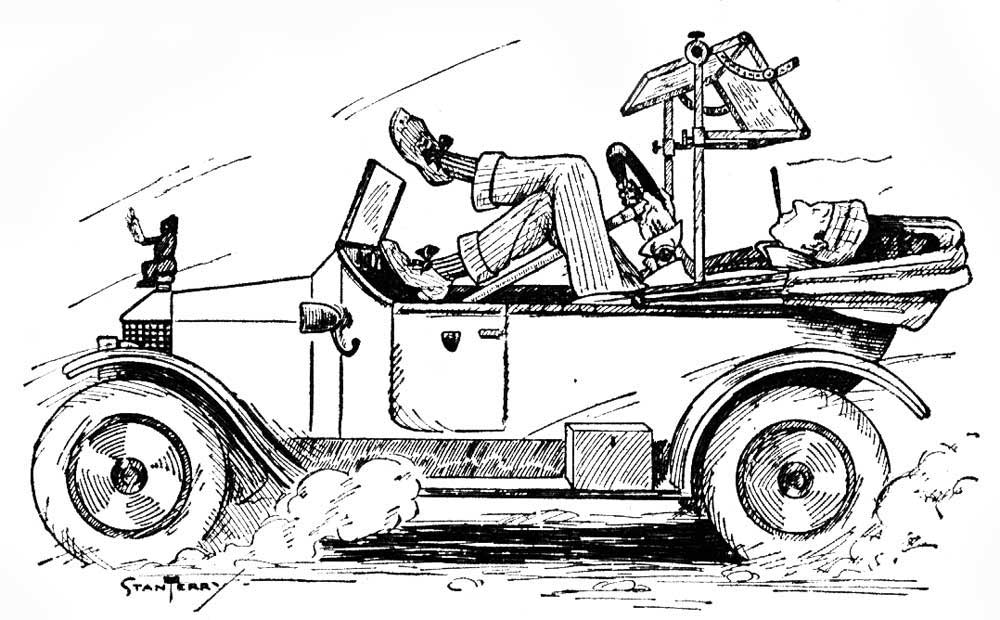
Suggested design for car which, by a simple arrangement op mirrors, enables the super-nut to drive in the special super-nutty position.
CRUEL KINDNESS.
There was once a schoolboy who was caught fishing in forbidden waters. He knew that the penalty was a switching (old style), and his contemporaries were pleased to remind him of the fact. Five o'clock was the hour fixed for the interview. The boy was small for his age, but brainy. All day he studied how he might save his skin and disappoint his friends, and at 4.30 he repaired stealthily to his dormitory to make his plans. They consisted of a sheet of brown paper—all that remained, alas, of a home-made cake—two copies of The Scout and a chest protector, which had been included in his outfit by a solicitious parent. By means of the fatal fishing line he attached the combined padding to his person, then, stiffly resuming his garments, knocked at the dread portal as the clock struck.
The Head glanced down over his spectacles. The boy stood strangely erect, and his face was brave though pale. A cane lay on the table. The master's eye was sterner than his heart. His hand reached for the cane, but he replaced it in a drawer, and for twenty minutes the listeners in the corridor vainly pricked their ears for the accustomed sounds.
"Well?" they inquired anxiously when the victim reappeared.
"He only jawed me," replied the small boy; and he wept.
An "agony" in The Daily Graphic:
"Maud darling, did you see my last massage?... Ada."
No, Ada, but she heard about it. Stick to it and you'll soon be down to twelve-stone-five again.
"In the Italian Chamber, on the 12th instant, there was only a majority of Bill. It is believed that the Giolitti Cabinet is tottering.—Ostasiatischer Lloyd."
North China Herald.
Gulielmo's casting vote cannot save them every time.
"On his motor-trip he never met any cat travelling either without lights after dusk or on the wrong side of the road."
Ceylon Observer.
Our dogs may well learn a lesson from this.
"The bride carried a large bouquet of Harum lilies."—South Staffordshire Times.
This sort has two stalks, of course.
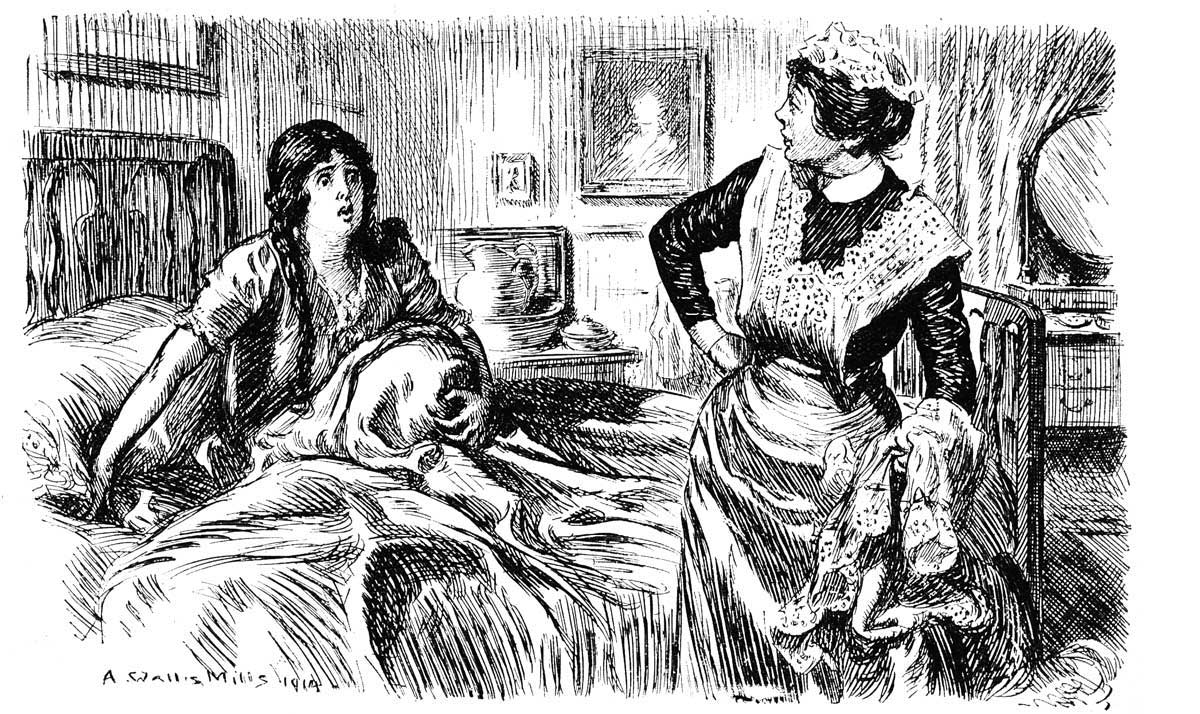
Mistress. "Why have you put two hot-water bottles in my bed, Bridget?"
Bridget. "Sure, Mem, wan of thim was leaking, and I didn't know which, so I put both in to make sure."
THE ODD MAN.
Nothing is quite as it should be with Jones,
Angular just where he ought to be curvy,
Padded with flesh where he ought to have bones.
Small and domestic, that make up the home:
Pays all the calls and leaves cards on the neighbours,
Leaving his wife to be lazy at home.
Pays and forgets to say "Bother" or "Biff";
Asks her to scatter the money and go it,
Beams at her bills when the totals are stiff.
Rushes them round to reception and fête;
Takes them himself to their concerts and dances;
Always looks pleased when they want to stay late.
Often absorbing with infinite glee
Sponge-cakes at breakfast and crumpets at dinner,
Whitstable oysters at five o'clock tea.
Every way's right for the man to be rubbed;
Grins when he's sneered at and jeered at and chaffed at;
Wriggles with pleasure whenever he's snubbed.
Never created a crankier clod,
More unaccountably made of surprises,
More topsy-turvily fashioned and odd.
CARPET SALES.
(In accordance with the current announcements of the leading West-End houses, and with no reference to Anglo-Russian diplomacy.)
Webs which the craftsman's hand with a patient cunning
Wrought through the perfect marriage of warp and woof—
Such as were laid, I imagine, in Bahram's rooms
Where (since their removal) the lion and lizard lie sunning,
And the ass, according to Omar, stamps his hoof—
Are selling off cheap, it is stated, for money down:
Oh, have you a remnant of Persia for half-a-crown?
After long years on the loom and infinite labour,
Piled in bales on piratical Arab dhows
At Bunder Abbas, and brought by a crew of roughs
(Each looking more of a cut-throat rip than his neighbour)
Down Ormuz Strait through a series of storms and rows—
Surely they ought to be bargains in London Town?
Oh, have you a remnant of Persia for half-a-crown?
Like those which adorn the Victoria and Albert Museum,
Yet, since you assert that you're selling authentic antiques,
I'd like to have one which the foot of a Caliph has pressed,
Or one where the wives of a Wazir (I fancy I see 'em)
Were wont to recline, curled up in their shimmering breeks,
Or one whereon foreheads were rubbed before mighty Haroun—
Oh, have you a remnant of Persia for half-a-crown?
A POLITICAL CORRESPONDENCE.
Sir,—It has been brought to my notice that at a meeting you addressed recently in your constituency you referred to me, and in the course of your remarks you said that I had employed in the House of Commons the "blustering artifice of the rhetorical hireling." May I ask you for your authority for this statement? I can only hope that your reply will avoid any ambiguity, and for your further enlightenment I may inform you that I am annoyed.
I am sure I am acting as you would wish me to do in sending a copy of this letter to the Press.
Yours faithfully,
N. Y. Z Thomson-Thomson.
A. B. C. Wentworth-Coke, Esq.
Sir,—How like you to read an inaccurate report of my speech! The words I used—you will find them reported in The Wastepaper Gazette for that week—were as follows: "We must then take these statements of Mr. Thomson-Thomson to be nothing but the blustering artifice of a rhetorical hireling." You will, I am sure, appreciate the difference between the two versions. If you do not, I may add that I am prepared to endorse the opinion expressed in the accurate version and to raise the question in the House of Commons at an early opportunity.
I am sending a copy, of this letter to the Press, as your reply will doubtless be irrelevant.
Yours faithfully,
A. B. C. Wentworth-Coke.
N. Y. Z. Thomson-Thomson, Esq.
Sir,—I have perused several reports of your speech, and with one exception they all agree that the word "the" was used and not the word "a." The Wastepaper Gazette, with which I think you are identified, is the only one which has printed your version of the speech, and I must therefore decline to accept your statement. Of course had the indefinite article been used it would have destroyed any ground for complaint. As you are attempting to evade the serious issue between us I can only conclude that your methods indicate the "blustering artifice of the rhetorical hireling." Unless I hear from you to the contrary I shall always maintain this view.
I have sent a copy of this letter to the Press.
Yours truly,
N. Y. Z. Thomson-Thomson.
A. B. C. Wentworth-Coke, Esq.
Sir,—My Secretary was much pained at your last letter. He has informed me of its contents. I can only say that I am surprised that a statesman of your undoubted ability should exhibit such peculiar controversial methods.
The circumstances are not new. In 1911, in the House of Commons, I find that I formulated the same opinion of you in substantially the same words, yet no objection was then raised by you nor could any objection have been so raised.
Since your election your attitude on every question has been deplorable, and although I am of the opposite party I may say that in this view I am in no sense actuated by party feeling. This is a matter too serious for the bitterness of partisanship.
I repeat that in my opinion you have frequently employed the blustering artifice of a rhetorical hireling.
Unless I hear from you within half-an-hour I shall send a copy of this letter to the Press.
Yours faithfully,
A. B. C. Wentworth-Coke.
P.S.—Could you oblige me by letting me know who was the originator of the phrase?
N. Y. Z. Thomson-Thomson, Esq.
Sir,—You have totally failed to substantiate the serious charges you made against me, and I am sorry, for the sweetness of political life, that you have not had the courage or the fairness to withdraw them.
I am glad that we have been able to conduct this correspondence on the courteous lines which have ever characterised our public careers.
I have sent a copy of this letter to the Press.
Yours faithfully,
N. Y. Z. Thomson-Thomson.
P.S.—I do not know who was the author of the phrase. But I knew you couldn't be.
A. B. C. Wentworth-Coke, Esq.
Sir,—I have nothing to add to my last letter.
Yours truly,
A. B. C. Wentworth-Coke.
P.S.—I purpose sending a copy of this letter to the Press.
N. Y. Z. Thomson-Thomson, Esq.
Some idea of last week's Parliamentary crisis may be gathered from the following poster:—
Cabinet
sends for
French
Our neighbours across the water were too busy with their own troubles to respond. Much better have sent for Germans. Their arrival might have pulled us together.
SHOP.
(Spring Thoughts by One In Trade.)
There always rises in my blood
A keen desire to see the year
Fresh opening in the bud.
For one brief day to get me gone
To some sweet rural spot, and see
How things are getting on.
Off by the ready train I fare;
How sweet are all the country sights,
How fresh the country air!
On every side I find a spell;
There is a pleasure in a farm,
And (almost) in the smell.
To mark them as they frisk and jump,
Or nestle round their anxious dams,
So placid and so plump.
From his clear ambush in the sky;
A blackbird (if it's not a thrush)
Sings from a wood hard by.
Whereon the goodly cattle browse,
And oh, it does me good to see
Such oxen and such cows.
Staggers about with weakling frame;
It is a sight that makes me laugh;
I feel so glad I came.
(Cherry, I'm told) adorns the scene;
While the horse-chestnut (as I think)
Is well-nigh turning green.
And bless the happy dawn of Spring,
Which thrills a butcher's homely heart
With such sweet visiting.
And I must quit these rural joys
To labour at my daily trade
Mid London's dust and noise.
To think on Spring's recurring boon,
Especially the calves and lambs:
They will be ready soon.
"Carpentier was getting to be a sorry sight at the finish. There was hardly anything to indicate that Jeannette had been in a 15-round glove-fight."—Times.
"All this Carpentier stood well, and quick as lightning at long range cut the mulatto's face to bits."—Morning Post.
We think our contemporaries are carrying their rivalry with each other too far.
THE CRAZE FOR SALARIED OFFICIALS-SOME SUGGESTIONS.
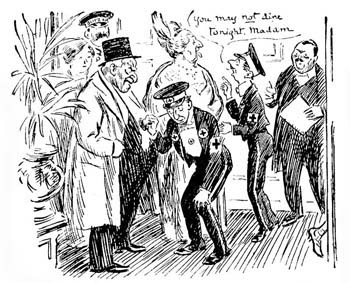
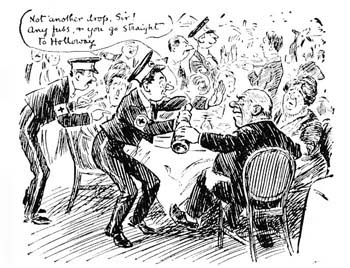
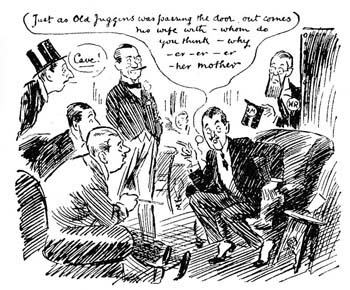
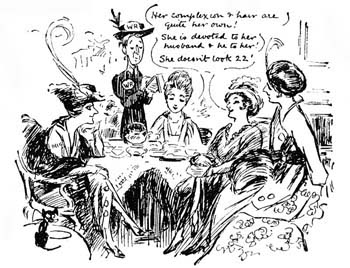
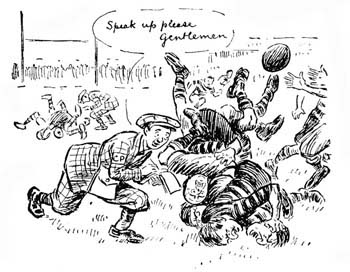
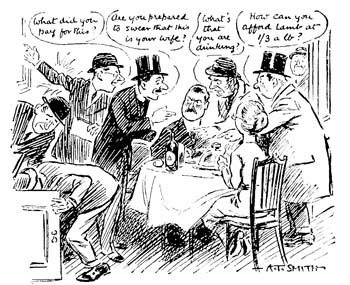
But best of all, make everybody an
Inspector of Officials, so
that
the great British Public can
get a little of its own back..
View larger image
COUNTRY LIFE EXHIBITION.
Interesting Programme.
Arrangements have now been completed for holding at the Piscicultural Hall, Kensington, an exhibition, the aim of which is to impart instruction in the art of living in the country. Such assistance is of the highest value, since many persons otherwise capable enough are unable to manage rural ways at once or deal with even such ordinary difficulties as neighbours' visits, invitations to garden parties, dinners, &c., political confessions, the retention of servants, the lighting system, the Vicar's calls, and so forth.
How to Keep Servants.
On this most difficult problem lectures will be given by a practised chatelaine. Various different makes of gramophones will be on view, with a list of tunes most acceptable to the servants'-hall. The maximum possible distance of the house from the nearest picture palace has been worked out from illuminating statistics. Useful hints about followers may also be gathered here.
Church.
Not every one in the country goes to church, but none can escape acquaintance with the Vicar. Hints as to how to deal with him are freely offered, and a variety of excuses for non-attendance have been drawn, ranging from a headache to Quakerism. Also what to say when the Vicar meets you on Sunday morning with your clubs. A list of minimum subscriptions to all conceivable charities is on sale.
Lighting.
For country householders who are at present burning oil, but think they would like an illuminant made of petrol or acetylene, a lecture will be given by an expert, who will examine all the myriad plants on the market and offer his opinion as to the least unsatisfactory. Diagrams of gardeners' burns and other injuries in a failure to master the intricacies of the engine are a popular feature. Also phonograph records of what certain gardeners have said, in various dialects, when told to tackle the new light.
Country Inn Section.
Everything necessary to the successful management of a country inn is on view here. Among the exhibits are a cup of coffee as prepared from coffee and a cup of coffee as served in a typical inn. By studying the two the inn-keeper may learn what is expected of him, and how to avoid the mistake of serving coffee in which any flavour of coffee persists.
Politics.
Here the settler in the country is on very delicate ground and in need of all his tact. As the exhibition lecturer will point out, he must, before avowing his own political creed, ascertain that of his landlord—particularly so if he has only a yearly tenancy. The chances are that the landlord is a Conservative. If the tenant is Conservative too, all is well; if the contrary—but we had better leave the details to the lecturer.
Names of Flowers.
A well-known horticulturist has invented a system by which the names of flowers can be taught in the shortest possible time, especially as the flowers have been carefully selected to exclude all but the fashionable. After only two lessons the pupil is in a position to lead a visitor through the garden and casually and accurately enumerate every delphinium and climbing rose in it. Suitable adjectives to apply to flowers are also provided.
Dogs.
Models of the two chief different types of country house—those which the dogs may enter as they will, and those from which the dogs are excluded—are on view.
Where to Live.
A lecturer who knows every inch of the country within a forty-mile radius of London will discourse at intervals on the respective merits of each popular district. A list of the principal residents in each will be available, together with a computation of the chances of a newcomer being called on by any ladies with a title. In order to make this department really efficient the intending new resident must of course give true particulars as to his or her social history. Districts where new residents who have been in trade, always excepting wine and the motor industry, are not called on, are carefully marked on a special Social map.
Taxis.
A map of England, coloured to show where the tariff is 8d. a mile, 9d. a mile, 10d. a mile, and 1s. a mile, has been prepared.
Railways.
A careful examination of the railways out of London has been made, with full particulars as to the speed of their trains, punctuality, cleanliness, warmth, week-end tickets and so forth. Also hints for doing the company by old hands. Also character sketches of the station-masters at all likely stations.
Aeroplanes.
In order that accidents due to falling airmen may be guarded against, a map has been designed for sale in the hall, showing those parts of the country over which flights are most common.